Canton, MI · Garage Door Service
Plymouth homes went up around 1960, mostly with torsion hardware now near 65 years old. We drive the 4 miles from Canton to fix broken springs on that original gear.
Plymouth's housing stock centers on 1960, which puts most garage doors here on torsion spring systems from the era when steel sectional doors had replaced the old wood swing-outs but before galvanized cable and nylon rollers became standard. That means a lot of the springs we pull off Plymouth doors are the original wind size, or a mismatched replacement from a repair done decades ago by someone guessing at the wire gauge.
We carry torsion springs in the common residential wind sizes and diameters that fit doors from this build era, along with the extension springs still found on a smaller share of older single-car openings. We also stock standard drums, cables, and bearing plates, since a spring failure on a 60-year-old door usually takes a bearing or a fraying cable down with it. What we don't stock is oddball hardware from doors that were custom-built or modified with parts no longer made. If your door has that, we tell you before we start, not after we've charged for a part that won't hold.
We drive out from Canton, about 4 miles, with the truck stocked for what this town's housing era actually needs, not a generic parts kit.
A spring that's original to a 1960 door has usually cycled tens of thousands of times more than the manufacturer ever rated it for, and the steel fatigues in ways you can't always see from the garage floor. On these older setups, the failure point is often not just the spring but the shaft it's wound on, which can be pitted or slightly bent from six decades of use.
Michigan's cold winters add another layer. Steel contracts in low temperatures, and a spring already near the end of its life is more likely to snap on a hard freeze morning than a mild afternoon. We see this pattern often enough in this climate band that we don't treat a winter break as bad luck so much as an old spring finally giving out at the worst possible moment.
The other complication is access. On some of these older Plymouth garages, the low ceiling clearance from a 1960s build means less room to maneuver a torsion bar safely, which changes how we rig the job compared to a newer door with more headroom. We tell you upfront if your garage falls into that category, since it changes the time the job takes, not just the parts.
A straightforward torsion spring swap on a door from this era usually goes faster than diagnosing what's actually wrong with it. Because Plymouth's housing sits mostly around that 1960 build year, we're often dealing with springs, drums, and end bearings that were installed together decades ago and have all worn down together. Replacing just the spring and leaving a pitted bearing in place is how a homeowner ends up calling again in six months.
We budget more time here than we would on a newer door for exactly that reason: we're checking the shaft, the bearing plates, and the cable drums as part of the same visit, not just swapping the obvious broken part and leaving. On a two-spring double door where one has snapped, we replace both, since the surviving spring from the same install is close behind it in fatigue.
We don't quote a fixed number of minutes here because the honest answer depends on what we find once the door is open. What we can say is that we come from Canton already expecting the older hardware, so we're not diagnosing that as a surprise on-site.
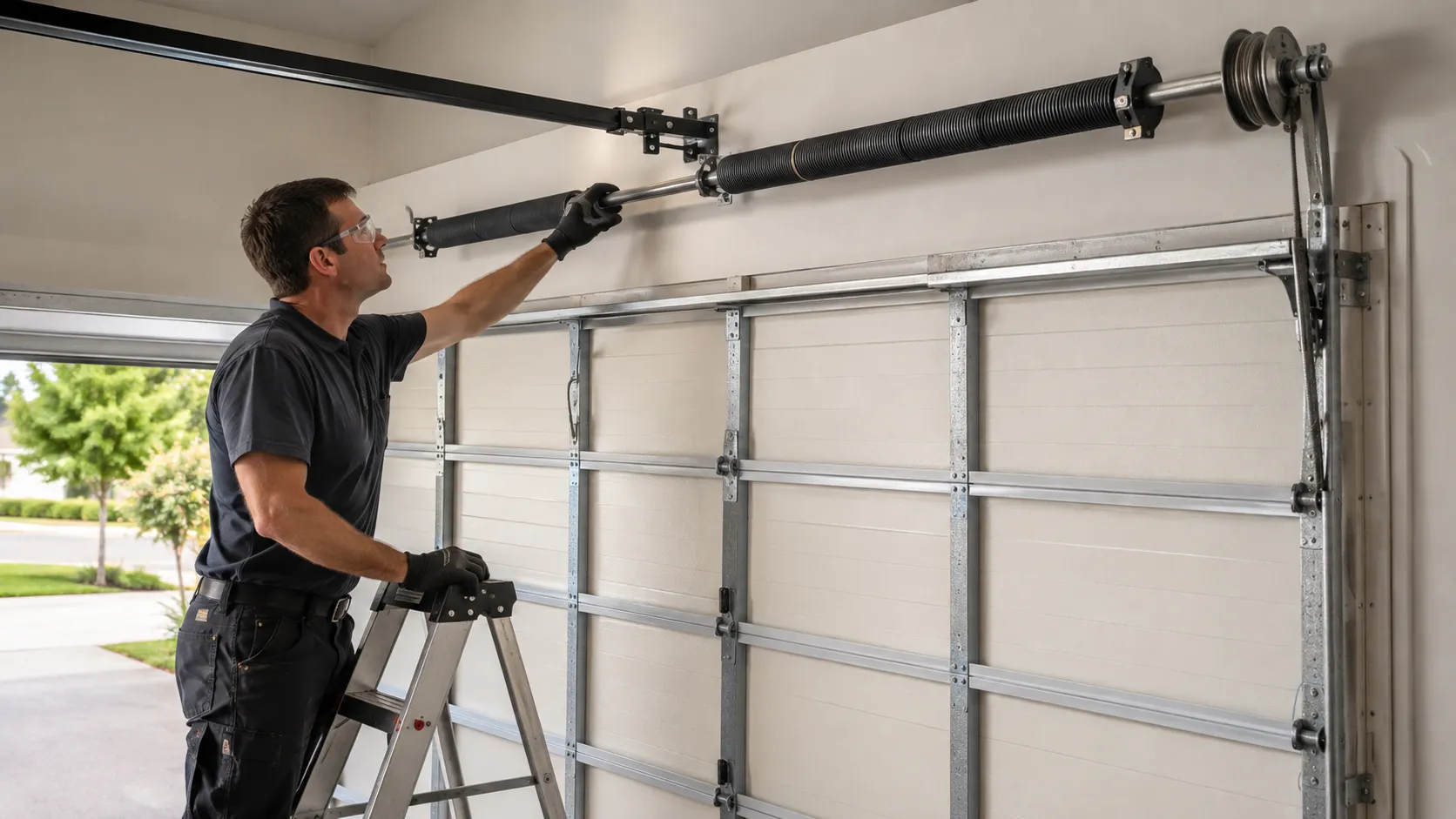
The repair itself is mechanical, not mysterious. We disconnect the opener, secure the door, unwind and remove the failed spring, and inspect the shaft, bearings, and cable drums that carried the load alongside it. On a 1960s door, we're also checking the track alignment and the condition of the rollers, since original hardware from that build year often shows wear in more than one place by the time a spring finally lets go.
We install new springs sized to the door's actual weight, not just a swap for whatever wind size was there before, since an incorrect match either strains the opener or won't lift the door evenly. We rebalance the door by hand before reconnecting the opener, and we test full cycles under load to make sure the fix holds, not just that the door closes once.
One limitation worth saying plainly: if the door itself has warped or the track has rusted through from age, a spring repair won't fix that, and we'll tell you when replacement is the more honest answer than a repair that won't last.
Most Plymouth homes were built around 1960, so a lot of the torsion springs still in use are original or close to it. Steel fatigues with cycles over time, and a 60-plus-year-old spring has usually gone through far more open-close cycles than it was rated for, which is why breaks cluster in older housing stock like this.
Yes. This area sits in a cold climate band, and steel springs contract in low temperatures. A spring that's already fatigued from age is more likely to snap on a cold morning than in mild weather, which is why winter calls for broken springs are common here.
About 4 miles. We don't run a separate branch in Plymouth; we drive out from Canton for each job, with the truck stocked for the older torsion hardware that's common in this town's housing stock.
On a two-spring setup where the springs were installed together, the surviving spring is usually close to the same fatigue point as the one that broke. We recommend replacing both so you're not paying for a second service call a few months later.
Call now or request a free quote - same-day service on most repairs, upfront written pricing.