Canton, MI · Garage Door Service
Plymouth's garage doors mostly date to 1960, so off-track failures usually trace back to original hardware. Canton Garage Door Pros drives the 4 miles to fix it.
Most of Plymouth's housing stock went up around 1960, and a lot of that original track, hinge, and roller hardware has never been swapped out. When a door jumps its track here, we're often looking at galvanized steel track sections that have been flexing and rusting for six decades, plus hinges worn oval at the pivot points rather than round. We carry standard 2-inch and 3-inch track in the sizes that fit doors from that build era, along with the sealed-bearing rollers that replace the old steel wheels most of these openers were never upgraded to run. Cable drums and end bearing plates from that period are usually a straight swap once we've got the door back in the opening. What we don't stock on the truck is discontinued track profile for doors that were custom-fit decades ago - those jobs sometimes mean ordering a section rather than fixing it same visit, and we'll tell you that up front instead of forcing a part that won't seat right.
The service area sits in a severe cold climate, and that matters more for an off-track door than people expect. Steel track that's spent sixty winters expanding and contracting gets brittle at the weld points, so a door that jumps the track once has usually done it before and will do it again unless the bent section gets replaced, not just bent back. In Plymouth specifically, median household income runs well above the wider Canton service area's $71,783, and we see that in the doors themselves - more insulated steel and wood-composite panels, heavier sections that put more strain on a track already sixty-plus years old. Heavier door, older track, cold-stressed steel: that combination is why a bent horizontal track section that would hold on a lighter door tends to fail again here within a season if it isn't swapped outright.
We run this job out of Canton, and Plymouth is a short drive - about 4 miles. That's close enough that we're not padding a visit with travel, but we don't promise a same-day slot on this page, because that depends on what's on the schedule the day you call. Once we're at the door, a straightforward off-track call - door popped out of one track, rollers intact, no bent section - usually runs under an hour once we've got the door back on its rails and the travel checked. If the track itself is bent or the cable's jumped the drum too, plan on longer, because we're pulling hardware and reseating it rather than just realigning a door that slipped.
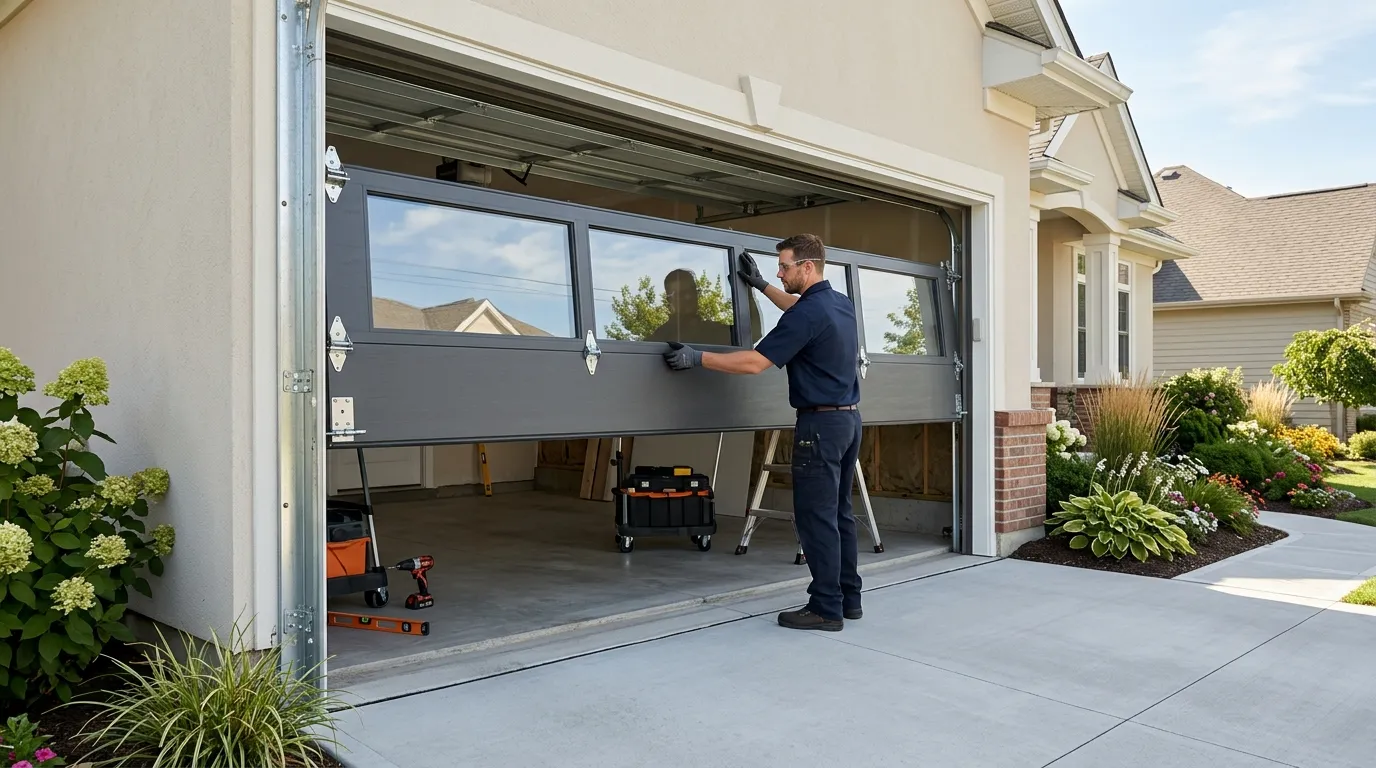
First we check why it came off, not just put it back on. On a door built to a 1960 opening, that usually means checking the track brackets for loose lag screws into wood jambs that have shrunk over sixty years, since a bracket that's worked loose lets the whole track twist under load. We realign the track to plumb, reset the rollers, and run the door manually before we ever touch the opener, because a door that binds on its own weight will strip an opener gear in a month. If a section of track is bent past straightening - which happens more on the older, lighter-gauge track common in this era - we replace that section rather than hammer it flat; a hammered-flat track holds for a while and then fails at the same spot. That's the honest limit here: cosmetic bends we can pull straight, structural bends we replace.
Most Plymouth homes date to around 1960, and that original track hardware is still in a lot of garages. Loose brackets, worn rollers, or a track that's been bent and never replaced are the usual causes. Once a door has jumped the track once, it's likely to do it again unless the actual cause gets fixed, not just the door reset.
We work out of Canton, and Plymouth is about 4 miles away. It's a short drive on our end, though we don't quote a fixed arrival window on this page since that depends on the day's schedule.
No. A cosmetic bend from a door bumping the track can usually be pulled straight. A structural bend, especially in older lighter-gauge track common in 1960s-era homes, tends to fail again at the same spot if it's just hammered flat, so we replace that section instead.
Yes. The service area sits in a severe cold climate, and decades of winter expansion and contraction make older steel track brittle at the weld points. That's part of why track from this era fails at the same spot repeatedly once it's been bent.
Call now or request a free quote - same-day service on most repairs, upfront written pricing.